Apr 17, 2026
Cheapest Fuel-Efficient Cars in Canada (Non-Hybrid): 8 Top Picks
Gas-powered cars have gotten surprisingly efficient — and you don't need a hybrid to keep fuel costs manageable. Here are the most fuel-efficient non-hybrid cars you can buy in Canada right now, organized by category.
TL;DR
The subcompact car segment has changed a lot recently — the Mitsubishi Mirage and Nissan Versa are both gone, and the Kia Rio and Forte have been replaced by the Kia K4. But the compact and hatchback segments still have solid fuel-efficient options at reasonable prices. The Toyota Corolla hatchback remains one of the most fuel efficient compact cars you can buy in Canada without going hybrid, and the Hyundai Elantra punches above its weight with up to 7.0 L/100 km (34 mpg combined) and a ton of standard equipment. If you're shopping for the best gas mileage without the hybrid premium, this list covers the top picks for 2026.
Key Takeaways
- The Mitsubishi Mirage and Nissan Versa are no longer available — the subcompact segment in Canada has essentially dried up.
- The Kia Rio and Kia Forte have been replaced by the new Kia K4, which comes in both sedan and hatchback body styles.
- The Toyota Corolla and Honda Civic remain the benchmark for fuel economy in the compact segment without hybrid hardware.
- Fuel consumption ratings in Canada are listed in litres per 100 km (L/100 km) — lower is better. To convert to miles per gallon (mpg), divide 235 by the L/100 km figure.
- CVT (continuously variable transmission) generally delivers better fuel economy than a manual in most of these cars.
- Several models on this list now include pedestrian detection, adaptive cruise control, and lane-keeping assist as standard equipment — not just in higher trims.
- If you're open to a hybrid, the Toyota Corolla Hybrid starts at around $28,000 CAD and delivers closer to 4.7 L/100 km. But for pure gas engines, this list is your guide.
In This Article
- What Is Fuel Efficiency (and How Is It Measured in Canada)?
- Most Fuel Efficient Hatchbacks in Canada (2026)
- Most Fuel Efficient Sedans in Canada (2026)
- Most Fuel Efficient Compact Cars in Canada (2026)
- Tips for Maximizing Fuel Economy
- FAQ
- People Also Ask
- Related Prompts
- About Canada Drives
If you've been following the Canadian auto market, you'll know that crossovers and SUVs dominate sales — but they tend to cost more to buy and more to fuel. Meanwhile, hybrid and plug-in hybrid powertrains add thousands to the sticker price, and it can take years to recover that cost through fuel savings alone.
For drivers who want a new vehicle with a low MSRP and reasonable day-to-day costs, a compact or subcompact car with a gas engine is still one of the smartest choices. Gas mileage has improved substantially across the board, and today's compact sedans and hatchbacks come loaded with features that used to be reserved for much more expensive vehicles.
One thing to note before we get into the list: unlike the US, Canada measures fuel economy in litres per 100 kilometres (L/100 km) rather than miles per gallon (mpg). If you want to compare with American figures, you can divide 235 by the L/100 km number to get an approximate mpg equivalent. For example, 6.7 L/100 km works out to roughly 35 mpg combined.
Natural Resources Canada publishes official fuel consumption ratings for all vehicles sold in Canada. Ratings are typically split between city and highway, plus a combined figure (which assumes about 55% city driving and 45% highway). All figures in this guide use the combined rating unless otherwise noted.
The landscape has also shifted since our original version of this article. A few models have been discontinued, and some have been replaced. Here's what changed — and what's worth buying today.
What Is Fuel Efficiency (and How Is It Measured in Canada)?
Fuel efficiency refers to how far a vehicle can travel on a given amount of fuel. Higher fuel efficiency means lower fuel costs over time. In Canada, fuel economy is expressed in litres per 100 kilometres (L/100 km) — the lower the number, the more efficient the vehicle. In the US, the equivalent metric is miles per gallon (mpg), where higher numbers mean more efficiency.
Fuel economy is affected by a range of factors: engine size and type, transmission, vehicle weight, aerodynamics, tire size, and driving habits. Technologies like idle stop-and-go (ISG) systems, continuously variable transmissions (CVTs), and direct fuel injection all contribute to better efficiency in today's gas-powered cars.
It's also worth knowing the difference between gas, diesel, and hybrid when it comes to efficiency. Diesel vehicles tend to deliver better fuel economy than gasoline on the highway, but diesel models are rare in the compact car segment in Canada. Hybrids — cars that pair a gas engine with an electric motor — can achieve significantly better fuel consumption in city driving because the electric motor handles low-speed operation. But hybrids cost more upfront. The cars on this list skip the electricity and rely purely on optimized gasoline engines, and many of them still achieve impressive numbers.
Most Fuel Efficient Hatchbacks in Canada (2026)
Hatchbacks are the most fuel efficient compact cars in Canada for buyers who need cargo flexibility without stepping up to an SUV. The sloped roofline and lighter weight of a hatchback body style compared to an SUV helps on fuel economy — and many of the most fuel efficient vehicles in this segment come from Toyota and Honda.
Toyota Corolla Hatchback — Most Fuel Efficient Hatchback in Canada
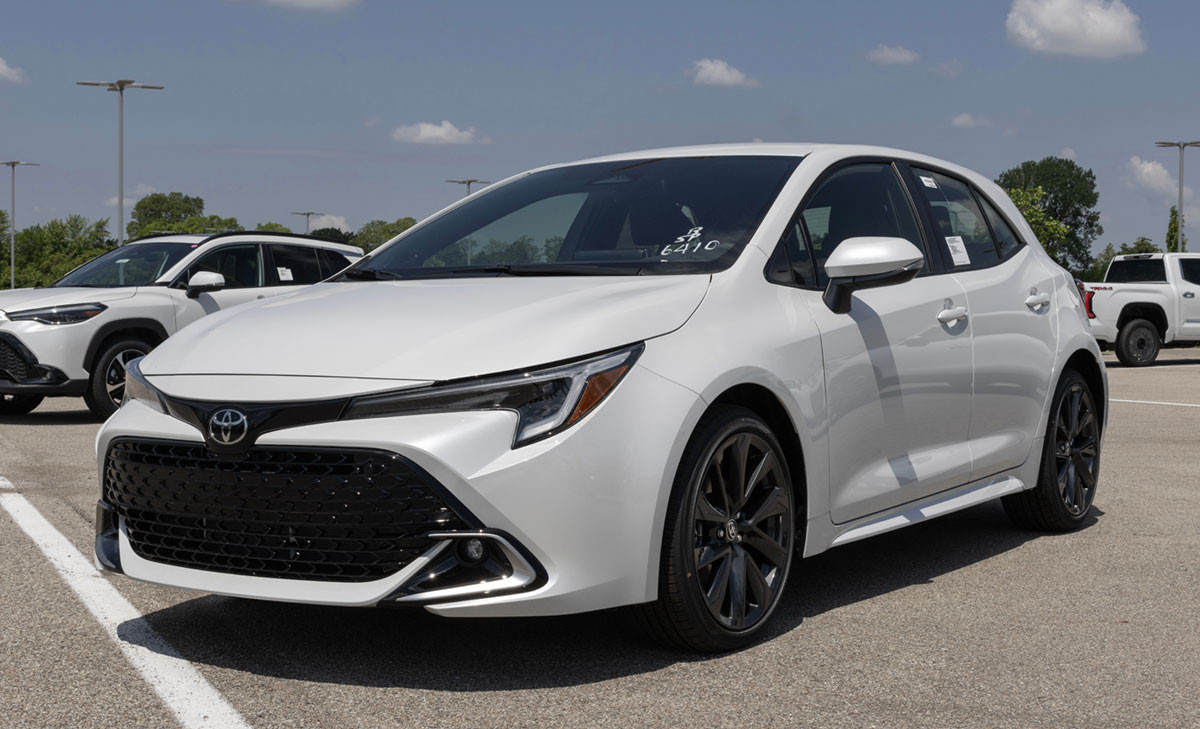
Toyota Corolla Sedan | Photo: jetcityimage - stock.adobe.com
- Starting price (2026): Approx. $26,000–$27,000 CAD (L trim)
- Combined fuel consumption (Natural Resources Canada): ~6.7 L/100 km (~35 mpg)
The Toyota Corolla hatchback is one of the best-value compact cars you can buy in Canada, and it continues to be among the most fuel efficient hatchbacks without a hybrid powertrain. The 2026 model carries the same proven 2.0L four-cylinder engine producing 169 hp and 151 lb-ft of torque, paired with a CVT. At highway speeds, the Corolla hatchback is a genuinely easy car to live with — composed, quiet enough, and predictable in a way that makes long drives easy.
What's changed for 2026 is more about standard equipment. The Toyota Corolla now comes with Toyota Safety Sense 3.0 across all trims, which includes pre-collision warning with pedestrian detection, adaptive cruise control, lane departure alert with steering assist, and automatic high beams. That's a generous standard equipment list for a car at this price point. The interior has received updated materials and improved infotainment connectivity with wireless Apple CarPlay and Android Auto.
Toyota also still offers the Corolla sedan and the Corolla Hybrid. The hybrid version delivers around 5.6 L/100 km combined (about 42 mpg) with eAWD available — significantly better numbers, but at a higher starting price. For buyers sticking to gas only, the Corolla hatchback remains the smarter buy for fuel economy in this body style. The spacious interior for a hatchback and useful cargo area make it practical too.
It's worth noting that the Toyota Corolla has one of the longest track records of any car sold in Canada. If you're shopping for a Toyota Corolla hatchback in particular, expect strong resale value and low long-term ownership costs. That reliability reputation is part of why Corolla demand stays consistently high.
If you're curious about what a high-performance Corolla looks like, we also covered the 2023 Toyota GR Corolla first drive — though at 300 hp and AWD, it's definitely not fuel efficient.
Honda Civic Hatchback
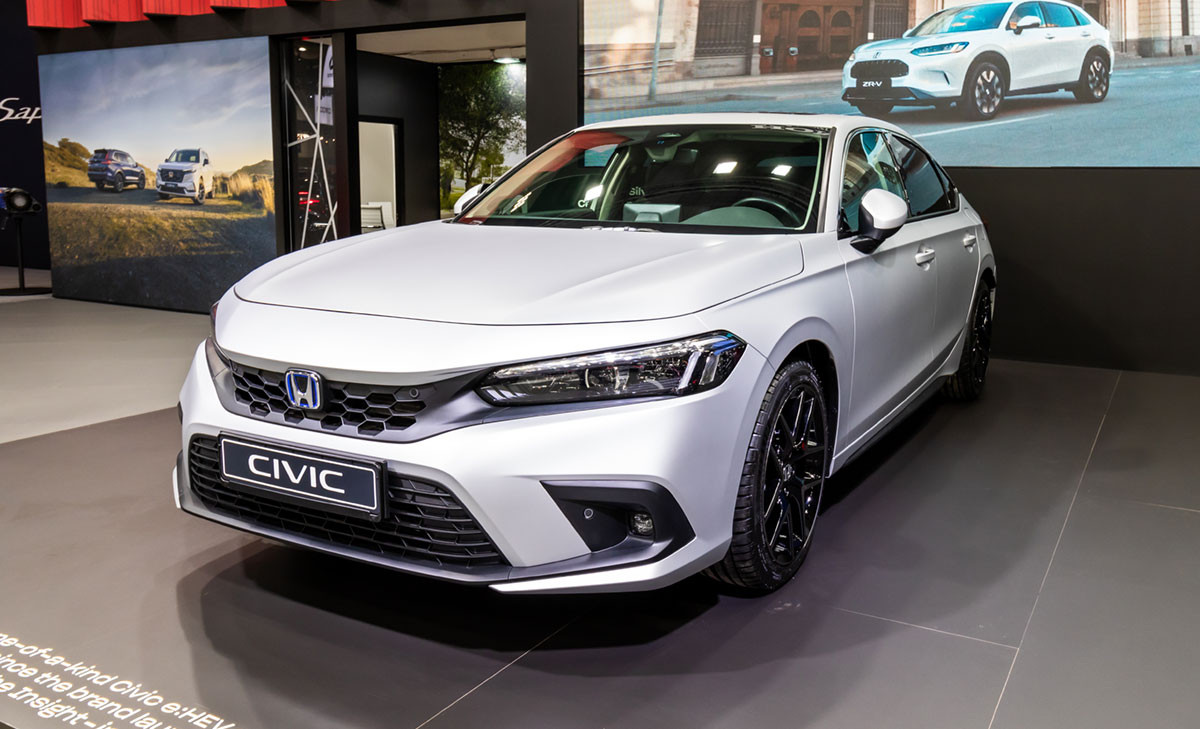
Honda Civic hatchback | Photo: VanderWolf Images - stock.adobe.com
- Starting price (2026): Approx. $30,000+ CAD (Sport trim)
- Combined fuel consumption: ~6.9 L/100 km (~34 mpg)
The Honda Civic hatchback shares its powertrain with the Civic sedan — a 2.0L four-cylinder paired with a CVT in base Sport trim — but adds a more versatile rear cargo area. Fuel consumption is in the same range as the Corolla hatchback at around 6.9 L/100 km combined. The Civic hatchback costs a bit more to start than the sedan, so if price is the priority, the sedan makes more sense.
Where the Civic hatchback stands out is in driving dynamics and overall refinement. It's a genuinely engaging car for a front-wheel drive compact, with sharp steering and a well-sorted chassis. The cabin is a notch above the Corolla's in terms of feel, and the Honda Sensing suite of safety features — including adaptive cruise control, automatic emergency braking with pedestrian detection, and lane-keep assist — comes standard.
Worth noting: Honda also now offers a Civic Hybrid in both sedan and hatchback form, which delivers around 4.9 L/100 km (about 48 mpg). It's not on this list since it has a hybrid mode, but if you're on the fence, the Civic Hybrid is one of the most compelling non-plug-in options available. For a gas-only compact hatchback with the best gas mileage, the Civic and Corolla are essentially tied at the top.
Kia K4 Hatchback
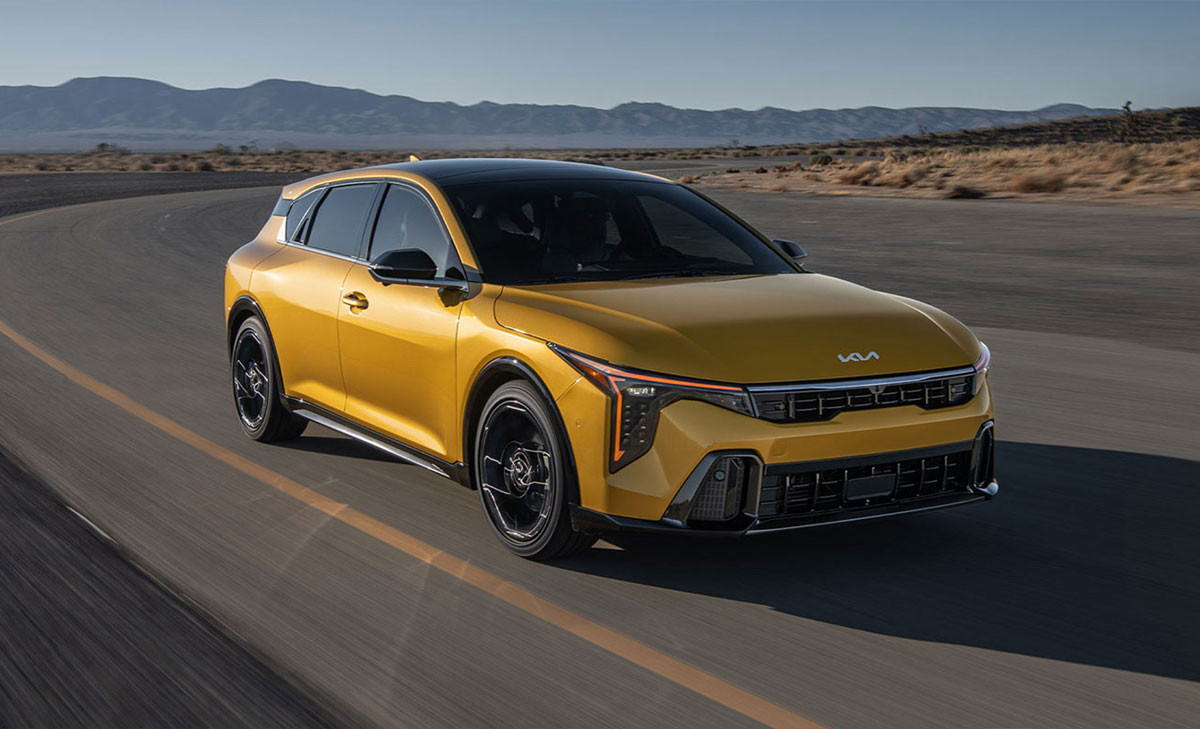
Kia K4 Hatchback | Photo: Kia
- Starting price (2026): $24,795 CAD MSRP
- Combined fuel consumption: ~7.3 L/100 km (~32 mpg, estimated)
The Kia K4 Hatchback is brand new for 2026 and replaces the Kia Forte hatchback in Kia's lineup. It's the freshest option in this segment by a wide margin. The K4 Hatch starts at $24,795 MSRP in Canada — $500 more than the K4 sedan — and brings a striking floating roof design and nearly 30 inches of combined digital displays as standard.
Under the hood is the same 2.0L four-cylinder (147 hp, 132 lb-ft) with an IVT (Kia's name for their CVT) that powers the K4 sedan. Cargo space is a standout: 629L behind the rear seats, expanding to 1,680L with the seats folded. That's genuinely useful room. Wireless Apple CarPlay and Android Auto come standard across all trims, and Kia's standard suite of safety features includes forward collision warning with pedestrian detection.
The K4 Hatchback doesn't quite match the Corolla or Civic for outright fuel economy, but it undercuts both on price while offering more cargo flexibility and a more modern interior. For buyers who are replacing an older Forte or Rio, this is the natural upgrade.
Most Fuel Efficient Sedans in Canada (2026)
Sedans remain the most fuel efficient body style for compact cars because they're lighter than hatchbacks or crossovers, with better aerodynamics at highway speeds. Here are the top picks.
Hyundai Elantra — Most Fuel Efficient Sedan in Canada (Non-Hybrid)
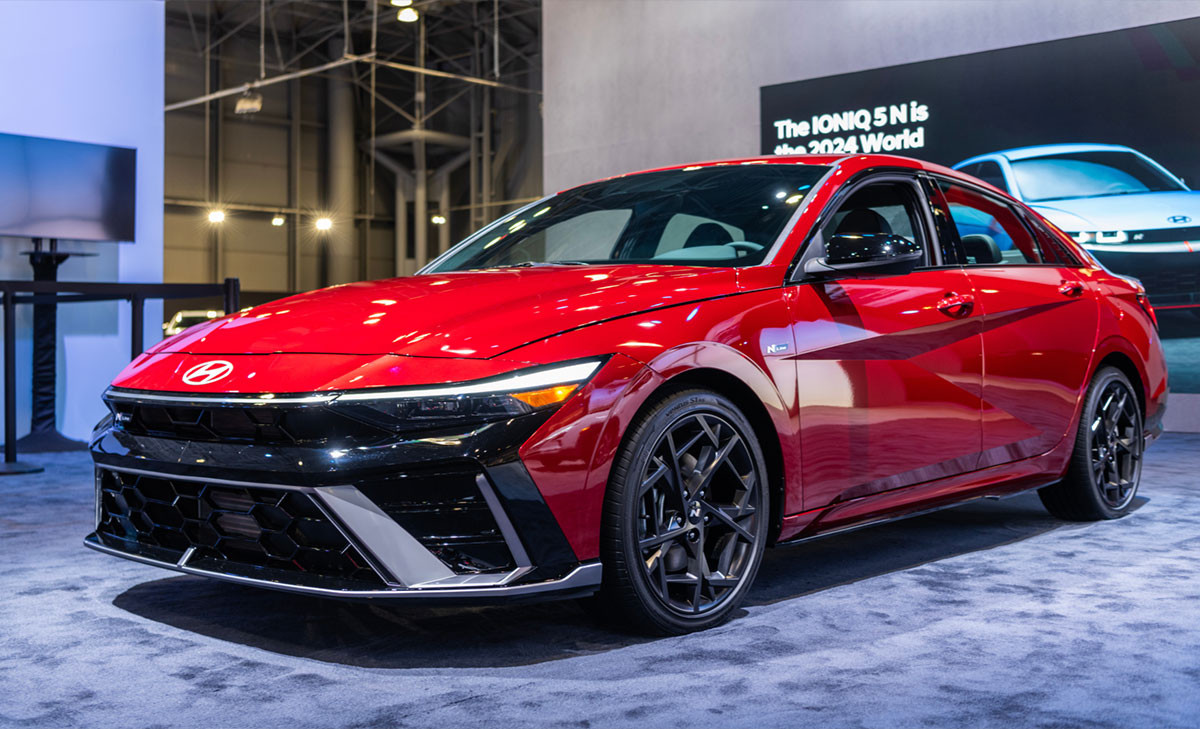
Hyundai Elantra | Photo: be free - stock.adobe.com
- Starting price (2026): Approx. $22,000–$23,000 CAD
- Combined fuel consumption (Natural Resources Canada): ~6.4 L/100 km (~37 mpg)
The Hyundai Elantra is the most fuel efficient non-hybrid sedan in Canada for 2026, with a combined rating around 6.4 L/100 km — among the best gas mileage in the non-hybrid compact class. It manages this with a 2.0L four-cylinder (147 hp) and a CVT, along with an idle stop-and-go (ISG) system that shuts the engine down when the car is stopped to reduce fuel consumption in city driving. That city driving advantage is exactly where a conventional gas engine tends to waste the most fuel.
The 2026 Elantra also comes with a genuinely generous standard equipment list. Even the base SE includes wireless Apple CarPlay and Android Auto, automatic emergency braking with pedestrian detection, blind spot monitoring, rear cross-traffic alert, and lane departure steering assist. Those are features that weren't standard on most compact cars just a few years ago. The interior is roomy for the segment, with a driver-focused cockpit and available dual 10.25-inch screens on higher trims.
For buyers comparing the Elantra against the Toyota Corolla or Honda Civic: the Elantra is the most affordable entry point, has the strongest standard fuel economy in gas-only form, and backs it up with Hyundai's 5-year bumper-to-bumper and 10-year powertrain warranty. Those are hard points to argue against at this price.
If you want to go further with efficiency, the Elantra Hybrid (which uses a 1.6L engine with an electric motor in hybrid mode) is rated closer to 4.5 L/100 km — but that's a separate article. For a straight gas sedan, the Elantra is the standard.
Toyota Corolla Sedan
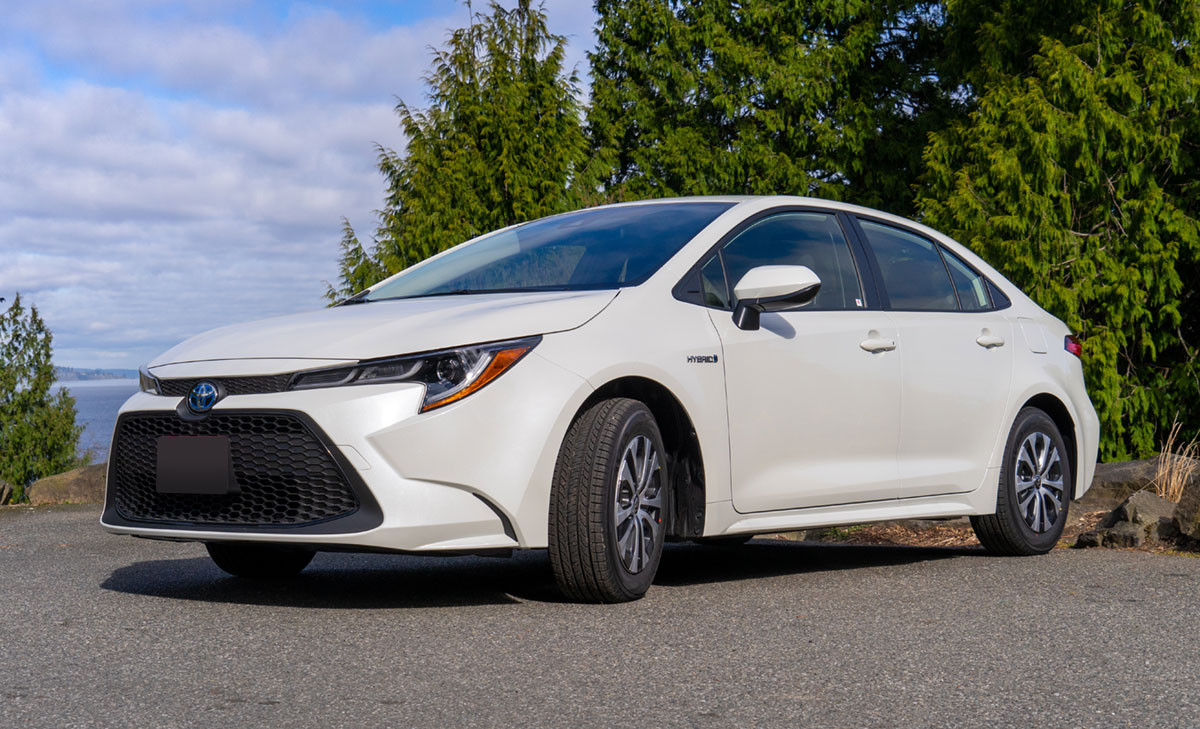
Toyota Corolla Sedan | Photo: CLShebley - stock.adobe.com
- Starting price (2026): Approx. $28,500+ CAD
- Combined fuel consumption: ~6.7 L/100 km (~35 mpg)
The Toyota Corolla sedan is, by just about every metric, the gold standard for reliable and fuel efficient compact cars in Canada. It's been one of the best-selling cars in the country for decades, and the 2026 model hasn't strayed from what makes it work. The 2.0L CVT-equipped sedan gets the same 6.7 L/100 km combined rating as the hatchback, but with a more spacious interior — specifically more rear legroom and a larger trunk.
For 2026, the Corolla sedan is offered in L, LE, SE, and XSE trims, all powered by the same 2.0L four-cylinder. Toyota Safety Sense 3.0 is standard, including adaptive cruise control with lane tracing assist, pre-collision warning with pedestrian detection, and automatic high beams. The L trim starts around $28,500 including destination, making it slightly pricier than the Elantra, but resale values and long-term reliability scores consistently back up that price premium.
The Toyota Prius is often mentioned alongside the Corolla as Toyota's most efficient vehicles, but the Prius is a dedicated hybrid — it's not on this non-hybrid list. If you want near-Prius fuel consumption but in a Corolla, the Corolla Hybrid is the move. But for a straight gas sedan, the Corolla delivers solid real-world range per tank and genuinely easy day-to-day ownership. A full tank in the Corolla L's 50L tank will take you well over 700 km on a highway trip at gentle acceleration and steady highway speeds.
For more on Toyota's full Canadian lineup, check out our coverage of Toyota's 2026 SUV lineup.
Volkswagen Jetta Trendline
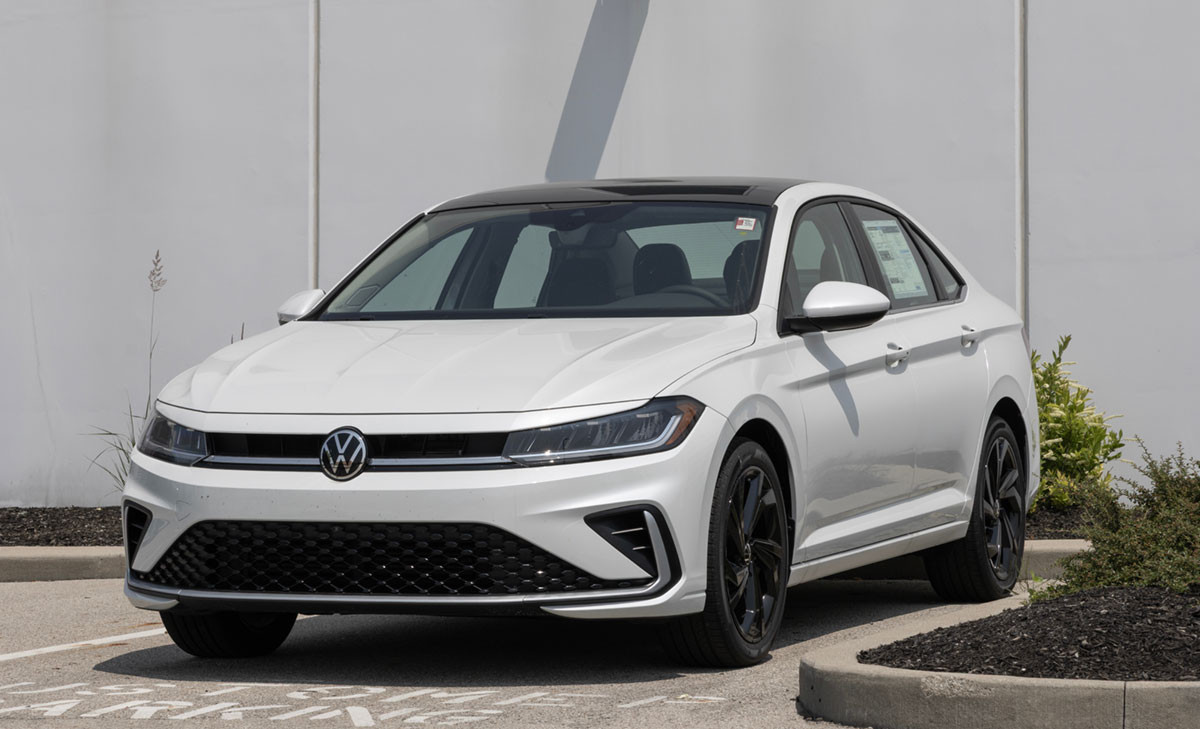
Volkswagen Jetta | Photo: jetcityimage - stock.adobe.com
- Starting price (2026): Approx. $25,000+ CAD
- Combined fuel consumption (Natural Resources Canada): 7.2 L/100 km (~33 mpg)
The Volkswagen Jetta is the most driver-focused option on this list. It's not quite as fuel efficient as the Corolla or Elantra, but at 7.2 L/100 km combined (5.9 L/100 km on the highway), it's still competitive — and it's noticeably more engaging to drive than anything else here.
The 2026 Jetta runs the same 1.5L turbocharged engine as before, making 158 hp and 184 lb-ft of torque, paired with an 8-speed automatic. That turbo makes the Jetta feel punchy in city traffic, and its highway manners are refined. At highway speeds, the 5.9 L/100 km rating is genuinely impressive for a turbocharged gas engine. The Jetta has a strong highway fuel economy story to tell.
Standard features on the Trendline include LED headlights, heated front seats, wireless Apple CarPlay and Android Auto, and forward collision warning. The 2026 Jetta also has an updated lighting design and Jetta badge integrated into the rear light bar. Where the Jetta loses ground is on starting price and on combined fuel consumption versus the Elantra and Corolla — but it makes up for it in driving satisfaction and European build quality.
Nissan Sentra
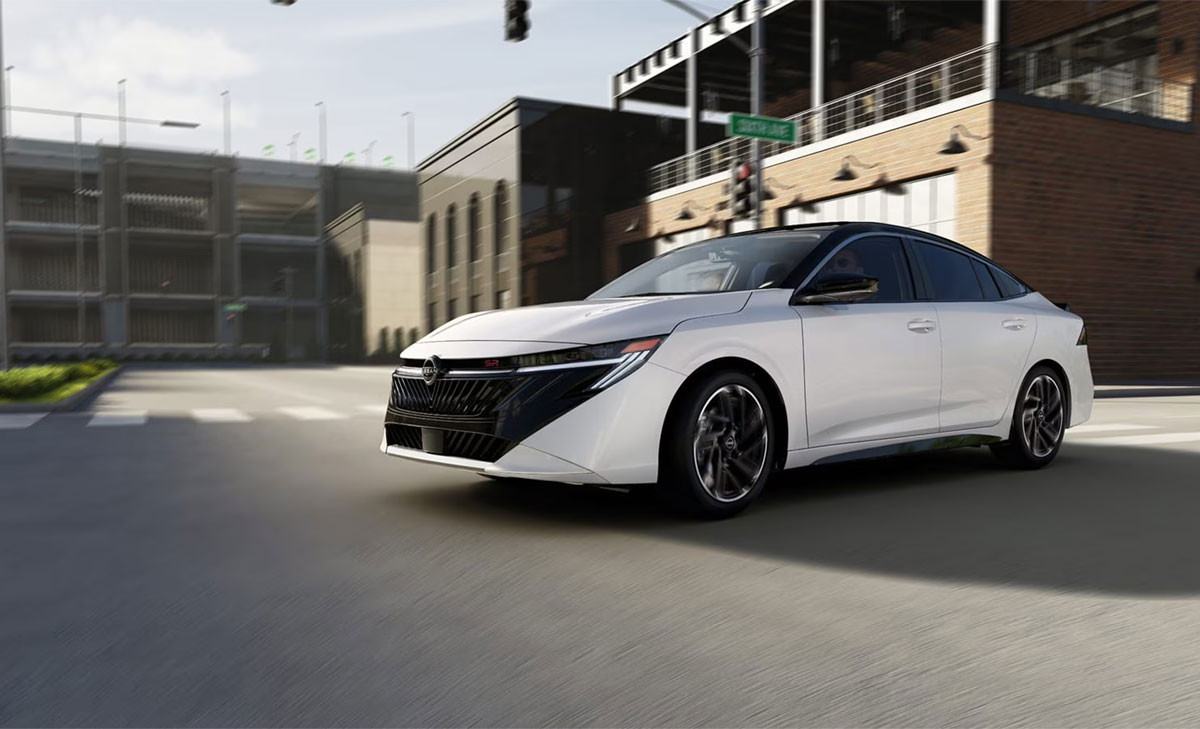
Nissan Sentra | Photo: Nissan Canada
- Starting price (2026): Approx. $24,000–$25,000 CAD
- Combined fuel consumption: ~7.0 L/100 km (~33 mpg)
With the Nissan Versa discontinued after 2025, the Sentra is now Nissan's most affordable and most fuel efficient car in Canada. The Sentra was redesigned for 2026 with updated styling, a new interior layout, and four trim levels. Power comes from a 2.0L four-cylinder paired with a CVT — the same formula that worked in the Versa, just in a larger, more refined package.
Fuel consumption is around 7.0 L/100 km combined, which is reasonable but not segment-leading. What makes the Sentra worth considering is the value proposition: it's one of the more affordable compact sedans in Canada and comes with solid standard safety features including automatic emergency braking and lane departure warning. The 2026 model also gains twin 12.3-inch screens in higher trims, which is a big step up from before.
Kia K4 Sedan
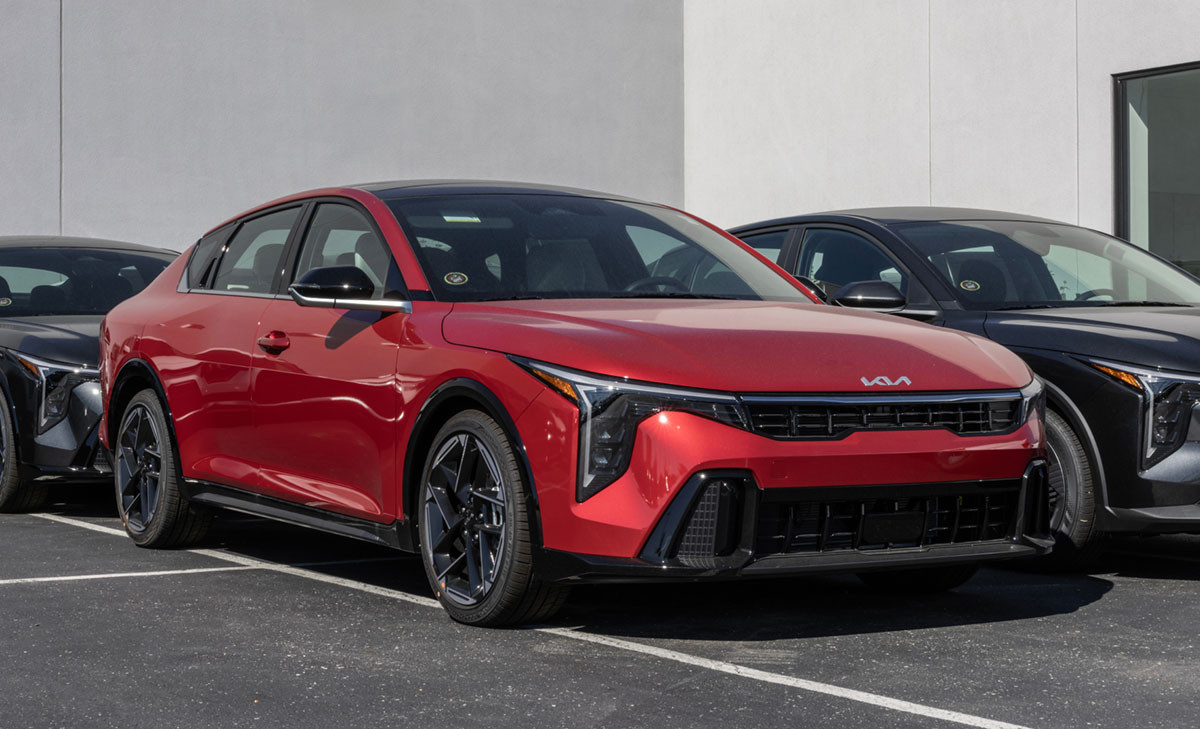
Kia K4 Sedan | Photo: jetcityimage - stock.adobe.com
- Starting price (2026): $24,295 CAD MSRP
- Combined fuel consumption: ~7.3 L/100 km (~32 mpg, estimated)
The Kia K4 sedan replaces both the Kia Forte and, indirectly, the Kia Rio in Kia's Canadian lineup. At $24,295 MSRP, it's one of the more affordable compact sedans on the market, and it brings significantly more technology and interior space than the cars it replaced.
Standard on all K4 trims: wireless Apple CarPlay and Android Auto, a 12.3-inch touchscreen, forward collision avoidance with pedestrian detection, and lane keeping assist. The base 2.0L engine with IVT is the fuel-efficient choice — there's also a 1.6L turbo available in higher trims for those who want more performance. Fuel economy isn't class-leading, but the value-to-feature ratio is hard to beat at this price. Kia's 5-year bumper-to-bumper and 10-year powertrain warranty carries over from the Forte.
Most Fuel Efficient Compact Cars in Canada (2026)
In Canada, "compact car" is often used interchangeably with "compact sedan" or "compact hatchback" — both body styles fall into the same category. The most fuel efficient compact car you can buy in Canada without hybrid hardware is the Hyundai Elantra sedan at approximately 6.4 L/100 km, followed closely by the Toyota Corolla (both sedan and hatchback) at 6.7 L/100 km.
If you're specifically looking for the most fuel efficient compact car, the Elantra wins on that metric. If you want the most fuel efficient hatchback in Canada in the compact class, the Corolla Hatchback is the answer — both are strong choices, and both include a solid suite of standard safety features at their base trim levels.
Here's a quick comparison of the top compact and hatchback picks:
| Model | Body Style | Starting MSRP (CAD) | Combined (L/100 km) |
|---|---|---|---|
| Hyundai Elantra | Sedan | ~$22,000–$23,000 | ~6.4 |
| Toyota Corolla Sedan | Sedan | ~$28,500 | ~6.7 |
| Toyota Corolla Hatchback | Hatchback | ~$26,000–$27,000 | ~6.7 |
| Honda Civic Sedan | Sedan | ~$29,000 | ~6.9 |
| Honda Civic Hatchback | Hatchback | ~$30,000+ | ~6.9 |
| Nissan Sentra | Sedan | ~$24,000–$25,000 | ~7.0 |
| Volkswagen Jetta | Sedan | ~$25,000+ | 7.2 |
| Kia K4 Sedan | Sedan | $24,295 | ~7.3 (est.) |
| Kia K4 Hatchback | Hatchback | $24,795 | ~7.3 (est.) |
Prices shown are approximate MSRP in CAD and exclude freight, taxes, and dealer fees. Fuel consumption figures are from Natural Resources Canada or manufacturer estimates. Verify current pricing with your local dealer.
Bottom Line
The compact car market in Canada has narrowed over the last few years — fewer models, fewer body styles, and higher starting prices across the board. But the cars that are left are genuinely good. The Hyundai Elantra delivers the best fuel economy in the segment without hybrid hardware. The Toyota Corolla and Honda Civic are about as close to a sure thing as you'll find in this price range. And the Kia K4 brings fresh technology and solid value to a segment that needed some new blood.
If you're on the fence between gas-only and hybrid, it's worth doing the math on your own driving habits. But if you want to keep upfront costs reasonable while still getting strong fuel efficiency and modern safety features, any of the cars on this list will do the job. For more on affordable hybrid options in Canada, we've covered those separately.
Tips for Maximizing Fuel Economy
Even the most fuel efficient vehicles on this list will use more gas than their ratings suggest if you're hard on the throttle. Here are a few practical ways to get closer to the rated fuel consumption:
Gentle acceleration makes a significant difference, especially in city driving. Natural Resources Canada recommends taking about five seconds to reach 20 km/h from a stop. Using adaptive cruise control on the highway — now standard on most of these cars — helps maintain steady speeds more consistently than manual driving, which improves economy at highway speeds. Coasting to stops rather than braking at the last moment also helps. Avoid running the A/C at full blast if you don't need it; air conditioning can increase fuel consumption by up to 20%. And keeping your tires properly inflated, air filter clean, and spark plugs fresh all contribute to maintaining your car's peak fuel efficiency.
FAQ
What is the most fuel efficient non-hybrid car in Canada in 2026?
The Hyundai Elantra leads the compact segment at approximately 6.4 L/100 km combined (around 37 mpg). The Toyota Corolla hatchback and sedan are close behind at 6.7 L/100 km. The Mitsubishi Mirage held this title for years at 6.2 L/100 km, but it was discontinued after 2024.
Are non-hybrid cars still worth buying for fuel economy?
Yes, especially if you want to minimize upfront cost. Hybrid versions of cars like the Toyota Corolla and Honda Civic deliver significantly better fuel consumption, but they cost $4,000–$7,000 more to start. Whether that premium pays off depends on how much you drive and how long you keep the car. For lower-mileage drivers, a gas-only compact can make more financial sense.
Is the Toyota Corolla hatchback more fuel efficient than the sedan?
No — both are rated at approximately 6.7 L/100 km combined when equipped with the CVT. The hatchback typically starts at a lower price than a similarly equipped Corolla sedan with the 2.0L engine, which is part of why it tends to make the top of these lists.
What happened to the Nissan Versa and Mitsubishi Mirage in Canada?
Both were discontinued. The Mirage ended after the 2024 model year. The Nissan Versa ended after 2025 when Nissan ceased production. There are no longer any new subcompact cars available in Canada for the 2026 model year.
How does L/100 km convert to mpg?
Divide 235 by the L/100 km figure. For example, 6.7 L/100 km ≈ 35 mpg. This is useful when comparing Canadian fuel economy ratings with US figures, which use miles per gallon (mpg).
Do fuel-efficient compact cars have good safety features?
Yes — most 2026 compact cars include automatic emergency braking with pedestrian detection, lane keeping assist, and adaptive cruise control as standard equipment even on base trims. The Hyundai Elantra, Kia K4, Honda Civic, and Toyota Corolla all include these features without requiring you to buy a higher trim level.
Is the Toyota Camry a fuel efficient non-hybrid option?
Not for 2026. Toyota made the hybrid powertrain standard on all 2025 and 2026 Camry trims. There is no longer a non-hybrid Camry available. The Camry now operates exclusively in hybrid mode, with combined fuel economy starting at around 4.5 L/100 km — exceptional numbers, but it's no longer a gas-only car.
Can I finance a fuel-efficient compact car with bad credit?
Potentially yes. Compact cars are often easier to finance than more expensive SUVs because the loan amount is lower. Bad credit car loans in Canada are available through dealerships that work with multiple lenders, and getting pre-approved before you shop can help you understand what price range is realistic.
People Also Ask
What is the cheapest fuel-efficient car in Canada right now?
The Hyundai Elantra is currently the most affordable compact car in Canada with the best gas mileage, starting around $22,000–$23,000 CAD. The Kia K4 sedan starts at $24,295 and is close behind. With the Mitsubishi Mirage and Nissan Versa both discontinued, there are no longer new subcompact options under $20,000.
Is a hybrid car more fuel efficient than a regular gas car?
Yes, significantly — especially in city driving. A hybrid uses an electric motor to assist (or replace) the gas engine at low speeds, running partly on electricity and reducing fuel consumption. The Toyota Corolla Hybrid, for example, achieves around 5.6 L/100 km versus the gas Corolla's 6.7 L/100 km. The difference is most pronounced in stop-and-go traffic.
What compact car has the best resale value in Canada?
The Toyota Corolla and Honda Civic consistently hold their value better than the competition. Both are perennial best-sellers and are in steady demand on the used car market, which supports strong resale values.
How many km can you get on a tank with a fuel-efficient compact car?
It depends on the tank size and your driving style. The Toyota Corolla has a 50L tank. At 6.7 L/100 km combined, you'd expect roughly 700+ km of range. At highway speeds with gentle acceleration, real-world range can exceed the rated figure. In city driving, expect to come in a bit under it.
Should I buy a compact sedan or compact hatchback for fuel economy?
Sedans tend to be slightly more aerodynamic at highway speeds, which can give them a small edge in highway fuel economy. But the difference is usually minimal. The choice between a sedan and hatchback comes down more to practicality: hatchbacks offer more cargo flexibility and are often priced similarly. The Toyota Corolla hatchback and Corolla sedan are rated at the same 6.7 L/100 km.
Is the Honda Civic or Toyota Corolla more fuel efficient?
The Toyota Corolla is slightly more fuel efficient in its gas-only form, at approximately 6.7 L/100 km versus the Civic's 6.9 L/100 km. Both are competitive. If you're deciding between the two, fuel economy alone probably shouldn't be the deciding factor — the Civic offers more driving engagement and a slightly more refined interior, while the Corolla has a stronger long-term reliability reputation and lower starting price in sedan form.
Related Prompts
- "What is the most fuel efficient non-hybrid car I can buy in Canada in 2026?"
- "Toyota Corolla hatchback vs Honda Civic — which has better fuel economy in Canada?"
- "How do I finance a fuel-efficient compact car in Canada with bad credit?"
- "Best gas mileage compact cars in Canada under $30,000 for 2026"
- "Hyundai Elantra vs Kia K4 — which is more fuel efficient for a Canadian buyer?"
About Canada Drives
Canada Drives helps Canadians get pre-approved for vehicle financing before they start shopping. Our online application matches drivers with local dealerships that have vehicle options for all credit situations, including bad credit or limited credit.
With one simple pre-approval, you can avoid wasted time at the dealership and shop with confidence knowing exactly what you're approved for.